The Most Important Relationship: Becoming the Bride of Christ
Pastor Ben continued his series on relationships by focusing on the most important relationship of all: our relationship with Jesus.
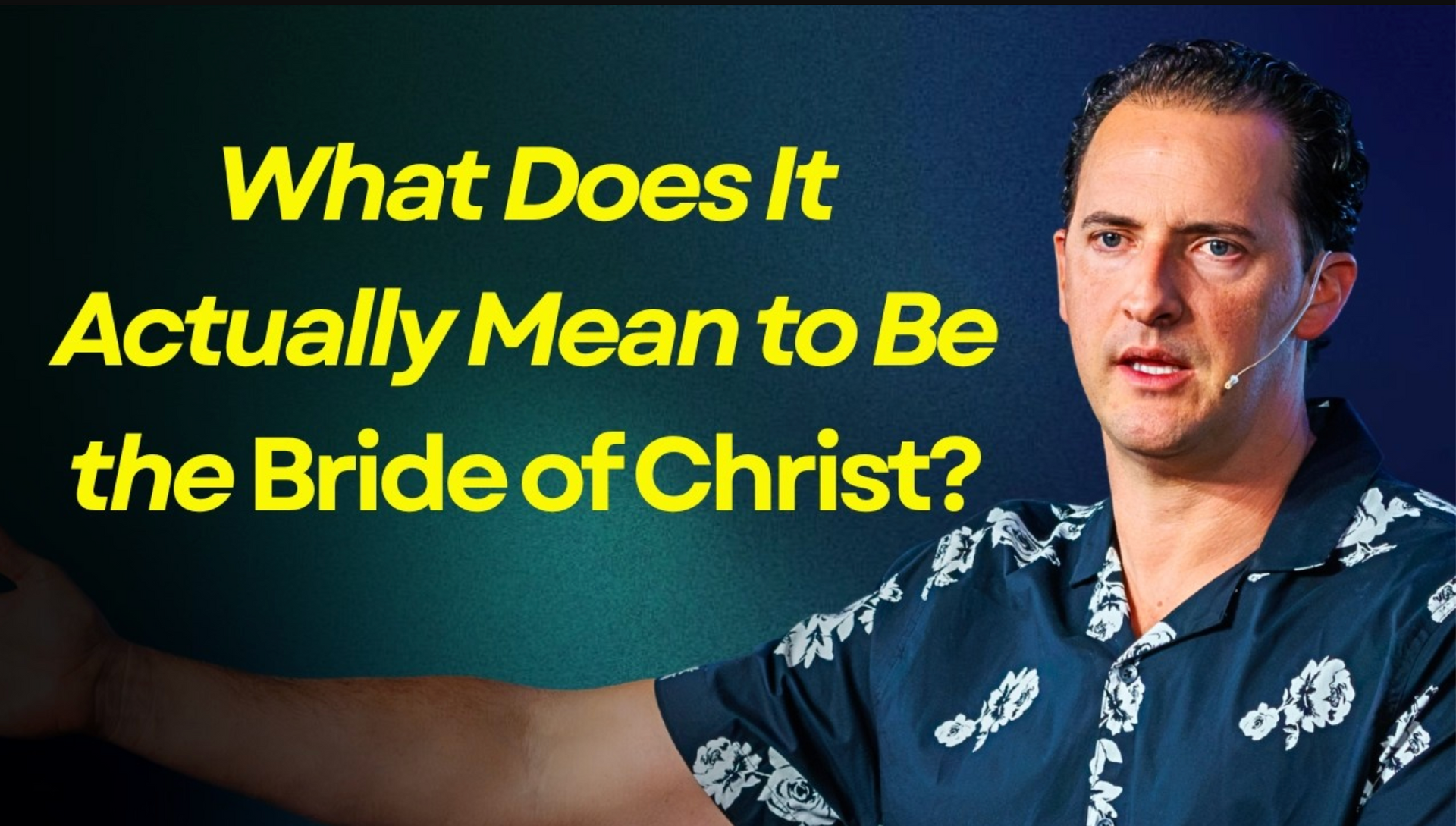
The Most Important Relationship: Becoming the Bride of Christ
Pastor Ben continued his series on relationships by focusing on the most important relationship of all: our relationship with Jesus.
We often say that Christianity is not a religion but a relationship. But what is that relationship actually meant to look like?
We know God as our Father, and we know ourselves as His sons and daughters. He has adopted us into His family, giving us security, identity, provision, and a heavenly inheritance. But Scripture reveals that our relationship with God doesn't end there. There is another dimension of relationship He wants us to understand: the Church is the Bride of Christ.
Covenant, Intimacy, and Oneness
Isaiah 54:5 declares, “Your Maker is your husband,” and in 2 Corinthians 11:2, Paul describes the Church as a pure bride belonging to one Husband—Christ.
For some, especially men, the language of being the “Bride of Christ” can initially feel difficult to understand. But this picture is not describing a physical or romantic relationship. It reveals something much deeper about covenant, spiritual intimacy, faithfulness, and oneness with Jesus.
Intimacy is about being truly known. God already sees everything in us—our desires, weaknesses, failures, victories, and the things we might try to hide. We aren't revealing anything to Him that He doesn't already know! Instead, intimacy grows when we willingly open our hearts to Him, lower our defenses, and become completely honest in His presence.
There is power in this kind of covenant union. Just as intimacy in marriage produces fruit and multiplication, our intimacy with Jesus produces spiritual fruitfulness. When we fail to understand the oneness Jesus desires with His Church, we can miss a dimension of relationship He intended us to experience.
Jesus said in John 15:4, “Remain in me, and I in you.” Fruitfulness flows from abiding in Him.
David Understood Covenant
King David gives us a powerful picture of someone who understood this kind of relationship with God.
1 Samuel 13:14 describes David as a man after God's own heart. His covenant friendship with Jonathan helped demonstrate something deeper than an ordinary promise: loyalty, commitment, and a willingness to lay down one's life.
That understanding of covenant can also be seen when David confronted Goliath. David was outraged that an uncircumcised Philistine would defy the people who belonged to God. He knew who Israel belonged to, and he understood the strength of covenant.
David's intimacy with God also transformed his worship. In 2 Samuel 6, this warrior king worshipped before the Lord with abandon. David's strength did not prevent him from expressing passionate worship; his security in God freed him to do it.
A secure and confident man does not need to fear losing his identity by worshipping God passionately. There is strength in lowering our guard and drawing close to Him.
The Bible Begins and Ends With a Wedding
here is a beautiful picture of Christ and His Church woven throughout Scripture.
In Genesis 2:21, Adam receives his bride from his own side, and the two become one. Paul later refers to this in Ephesians 5:31–32, explaining that this mystery ultimately points to Christ and the Church.
Then, at the cross, Jesus' side was pierced and blood and water flowed out.
Pastor Ben drew a parallel between Eve coming from Adam's side and the Church coming from Christ. Jesus' blood cleanses us from sin, while the water pictures the ongoing washing and renewing that prepares His Church as His Bride.
The Bible begins with a wedding in Genesis, and Revelation ends with a wedding as Jesus receives His Bride.
The Bridegroom Is Coming Back
Ephesians 1:13–14 describes the Holy Spirit as the guarantee of our inheritance. Pastor Ben compared this guarantee to an engagement ring—a sign that we belong to Christ and that something greater is still to come.
Then Jesus gives us this promise in John 14:2–3: He is preparing a place for us, and He will return and take us to be with Him.
Christ is coming back for His Bride.
That makes Jesus' parable of the ten bridesmaids especially sobering. Five were unprepared and eventually heard the heartbreaking words, “I don't know you.”
They appeared to be waiting for the Bridegroom, but the issue went deeper than outward preparation. The emphasis was on knowing Him—having the oil of a genuine, cultivated relationship with Jesus.
This is why Jesus continually calls us to remain in Him.
John 17:23: “I am in them and You in Me.”
1 Corinthians 6:17: The one who is joined to the Lord is one spirit with Him.
1 Corinthians 2:16: “We have the mind of Christ.”
These verses reveal something extraordinary: Jesus doesn't merely invite us to follow Him from a distance. He invites us into oneness with Him.
Do We Know Him?
There is more available in our relationship with God than simply knowing about Him.
We can know God as Father and enjoy all the security and inheritance that comes with being His children. But Scripture also invites us to understand the covenant intimacy of Christ and His Bride.
Jesus is inviting us to lower our defenses, trust Him with every part of ourselves, remain in Him, and allow His Word to continually transform us.
The question is not simply, “Do I know about Jesus?”
It is: “Do I know Him?”
May we be a Church that doesn't simply wait for the Bridegroom but knows Him intimately, walks in covenant with Him, bears fruit through our union with Him, and lives ready for His return.
Christ is coming back for His Bride.
Pastor Ben will continue teaching on the Bride of Christ next week.
Watch the entire sermon here.